Table of contents
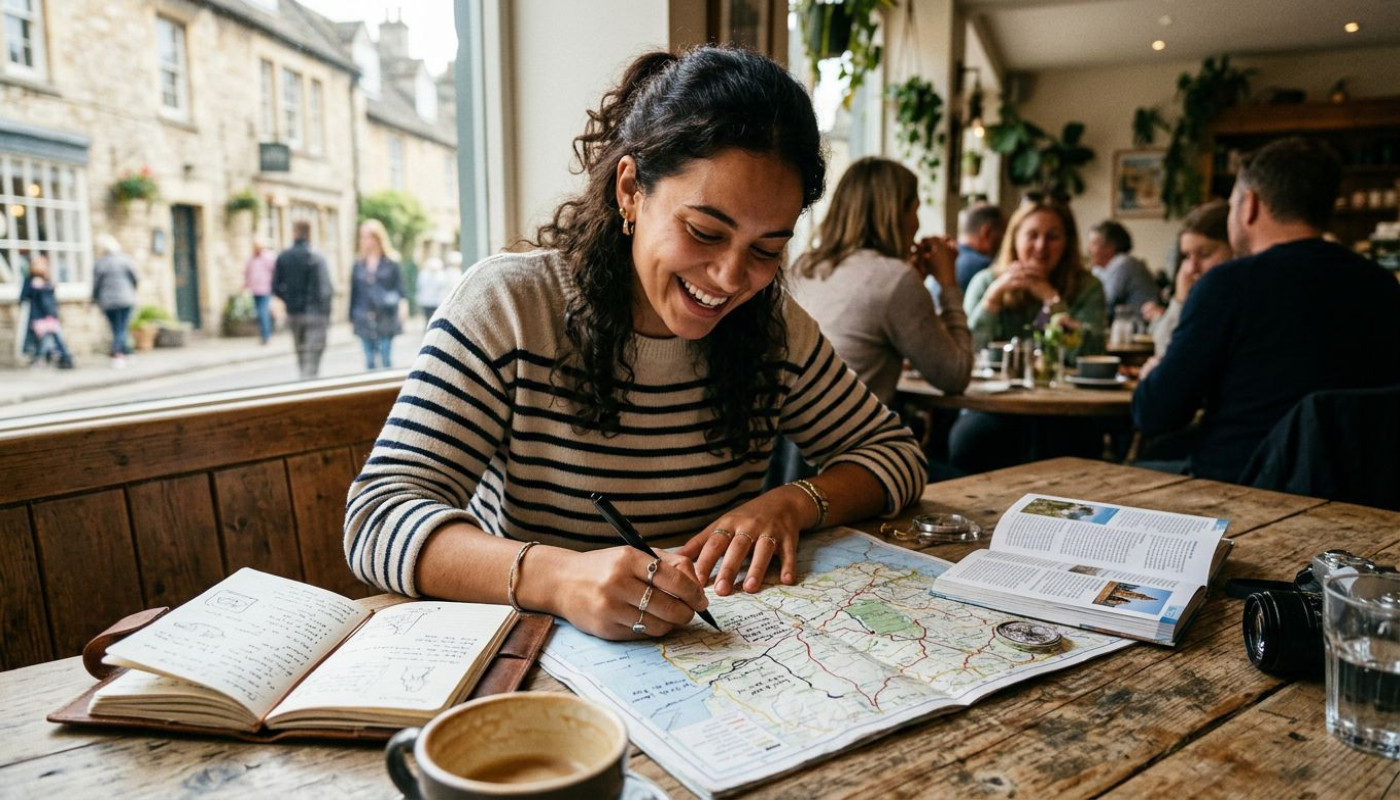
Why do some trips feel scripted while others crackle with possibility? In 2026, travellers are mixing shorter breaks with longer “work-from-anywhere” stays, and industry numbers reflect that shift: Europe remains the world’s most visited region, international tourism has rebounded close to pre-2019 levels, and city breaks are back in force, yet travellers are demanding flexibility, not fixed timetables. The craft of itinerary-building has changed accordingly, blending solid logistics with intentional blank spaces, and turning a plan into a launchpad for surprise.
Start with anchors, not a minute-by-minute script
Planning for spontaneity sounds like a paradox, yet the best itineraries begin with a few “anchors” that hold the trip together, and everything else is allowed to breathe. Think of anchors as non-negotiables: the flight or train arrival window, the neighbourhood you want to wake up in, and one or two experiences that would genuinely sting to miss. That might be a morning museum slot that sells out, a restaurant you’ve dreamed about, or a day trip with limited departures. The World Tourism Organization has repeatedly underlined how demand has shifted toward experiences and shorter booking windows since the pandemic era, and that trend is exactly why anchors matter: they protect the essentials when availability tightens, while leaving room for discovery when your mood changes.
To make those anchors work, treat time like a budget. For a three-day city break, reserve roughly one “structured” block per day, and keep the rest open for wandering, weather, and local tips. This is not laziness, it is design. A single timed reservation in the late morning, for example, can create a natural rhythm: you wake up without rushing, explore a market, and still have a clear destination that prevents the day from dissolving into indecision. Leave afternoons softer, because crowds, fatigue, and heat tend to peak then, and evenings can flex around what you discover: a concert poster, a sunset spot recommended by a barista, or a street where the food smells too good to ignore.
Anchors also reduce the hidden friction that kills spontaneity: long cross-city transfers, poorly matched opening hours, and the creeping anxiety of “are we missing something?” When you place your anchors close together geographically, preferably within walking distance or a single transit line, you stop spending the trip commuting. City authorities in many European destinations have been pushing visitor dispersal and crowd management, and travellers feel the consequences in queues and timed entries, so clustering your must-dos is not only comfortable, it can be the difference between a relaxed detour and a day lost to lines.
The final trick is to write the plan in pencil, even if you type it. Put your anchors in a simple order, then add two optional modules per day: a rainy-day backup and a high-energy alternative. If the weather flips, or if your legs give up, you still have a satisfying path forward, and that is what frees you to say yes to the unexpected without fear of wasting the day.
Build detours into the geography
Every great spontaneous moment has a practical precondition: you need to be in the right place, with enough time, and without the stress of racing to the next appointment. That is why geography is the most underrated tool in itinerary design. Instead of plotting attractions as a checklist, plan by “walkable scenes”: a riverside stretch at golden hour, a cluster of galleries and cafés, a residential district with parks, a waterfront that changes mood after dark. When you plan by scenes, detours feel natural, because you are already moving at human speed, and the city can interrupt you in the best way.
This approach also matches how travellers behave in real life. Tourism researchers and destination managers have noted the rise of “slow” urban tourism, where visitors prioritise atmosphere, local food, and neighbourhoods over the old trophy-shot circuit. Add to that the explosion of map-based recommendations and short-form video, and you get itineraries that are increasingly driven by proximity and vibe, not by canonical lists. So design routes that invite interruption: choose a museum, then deliberately walk there via a market street; schedule a viewpoint, then approach it through a park; book dinner in an area that has multiple bars, so you can drift before and after.
A simple method works in almost any city. First, pick your base with intention, because your mornings and late evenings will orbit it. Second, draw a triangle of three zones you want to experience, and keep each day inside one side of that triangle. Third, identify “doorways” for spontaneity: a ferry stop, a food hall, a train station with regional links, a promenade where pop-up events happen. Doorways matter because they multiply options on the spot. If you reach a ferry dock and notice the next boat leaves in ten minutes, you can take it without rebuilding your entire schedule.
In practice, this is where a destination-specific guide can help, not to lock you into a plan, but to show the natural seams of a place: where crowds form, where transport is easiest, and which neighbourhoods reward wandering. For travellers mapping out a trip that can pivot between iconic sights and unplanned finds, https://www.venice-trip.com is one example of a resource that frames the city through routes, practical timing, and local logic, which can make improvisation feel less like guesswork and more like informed curiosity.
Let the calendar do the surprising
Spontaneity is not only about personal mood, it is also about what the city is doing that week. Festivals, public holidays, school breaks, and even cruise schedules can quietly reshape a destination’s rhythm, and ignoring that calendar is how travellers end up improvising in the worst way: stuck in crowds, priced out of last-minute tickets, or wandering into closures. The good news is that once you plan around the calendar, the city starts offering you surprises instead of obstacles.
Begin with the high-impact dates. In much of Europe, summer weekends and major holiday periods compress demand into predictable spikes, and prices respond accordingly. Industry data from UN Tourism and national statistics offices show that the post-pandemic recovery has brought back strong peak-season pressure, even as shoulder seasons have grown in popularity among travellers seeking better value and fewer crowds. Translating that into itinerary craft is straightforward: if you travel in peak weeks, book your anchors earlier and keep your spontaneous blocks in the early morning or late afternoon, when pressure eases. If you travel in shoulder season, you can flip the logic, leaving more of the trip unbooked and letting weather and local buzz guide you day by day.
Then, zoom into the micro-calendar: museum late openings, market days, weekly closures, and evening events. Many European museums close one day a week, and many markets have a “big” day when the best vendors appear, and those patterns can make or break a short trip. Use them as engines of spontaneity. If you know a neighbourhood has a lively night market on Friday, you can keep Friday evening free, and decide on the spot whether you want street food, live music, or a long dinner. If you know a museum stays open late on Thursday, you can wander all afternoon without guilt, then slide into culture after dusk.
Weather is the other calendar that matters, and in an era of more frequent heatwaves and sudden storms, it deserves respect. A smart itinerary contains heat-aware and rain-aware alternates, not as boring backups, but as different moods of the same city. On hot days, plan indoor anchors and waterfront walks; on rainy days, move toward museums, cafés, and covered passages. If you design the trip like this, a forecast change does not “ruin” a day, it simply selects a different version of it, and you stay open to the moment rather than fighting it.
Use constraints as a creative tool
Freedom, oddly, thrives on limits. The most spontaneous travellers are often the ones who set clear boundaries: how far they are willing to walk, how many neighbourhood changes they can tolerate in a day, and how much money they want to spend without thinking. Without those constraints, every decision becomes a negotiation, and the trip turns into a series of small stresses. With them, choice becomes easier, and surprise becomes enjoyable.
Start with the “two-switch rule”. Limit yourself to two major switches per day: one switch of location and one switch of mode. For example, you might walk and take a single boat ride, or explore one district and then move once for dinner. More than that, and you spend mental energy on navigation, tickets, and timing. Less than that, and you are free to chase a recommendation without worrying that it will domino into a missed reservation. This is especially useful in cities with complex transport or fragile walkability, where a single wrong turn can cost an hour and flatten your appetite for improvisation.
Money is the next constraint that buys you joy. Decide in advance what you are willing to splurge on, and what you want to keep casual. A simple split works: one “big” spend per day at most, and everything else is flexible. That might be a special dinner, a guided tour, or prime-time tickets, while lunches and small attractions remain open-ended. When you do this, you stop second-guessing every gelato, every ferry hop, every spontaneous gallery entry, because the budget already has permission built in. It also helps with price volatility: dynamic pricing is now common across attractions and transport, and travellers who decide their splurges early are less likely to overpay in the moment.
Finally, design for energy, not only for time. The classic itinerary mistake is to stack heavy cultural visits back-to-back and assume enthusiasm will carry the body. Instead, alternate cognitive load: a museum morning, a long lunch and a walk, then a light experience such as a viewpoint or a neighbourhood drift. The rhythm matters because spontaneous decisions usually happen when you are comfortable, not when you are exhausted. The city rewards you when you are receptive, and that receptiveness is, in a very practical sense, something you can schedule.
Your next booking, in practical terms
Lock in one or two anchors early, then keep daily “blank space” protected, and you will travel with both direction and freedom. Budget for one planned splurge, and let the rest be opportunistic. Check local calendars and opening days before you arrive, and if you qualify for transport discounts or museum reductions, secure them upfront to keep the trip flexible once you land.
Similar
Why Packing Mistakes Can Rewrite Your Journey’s Whole Story

What Software Companies Won’t Tell You About User Feedback

The Rise of Slow Travel: Embracing the Journey

Discover the Hidden Gems of Italy's Lesser-Known Regions

Walking on the Wild Side: Dark Tourism Destinations
