Table of contents
One forgotten charger, one overstuffed carry-on, and suddenly your first day is spent hunting for replacements instead of seeing the city. After years of post-pandemic travel surges, airlines have regained much of their pre-2020 traffic, and with it, the familiar mix of tight connections, stricter cabin rules, and baggage headaches that punish sloppy packing. The good news is that most travel-day chaos is preventable, because the biggest disruptions usually start long before you reach the gate, with decisions made on your bedroom floor.
The suitcase choices that cost hours
Ask frequent travelers what derails a trip, and you will hear the same refrain: time leaks out in tiny, avoidable moments. The wrong bag is often the first culprit, because it dictates everything that follows, from how quickly you move through stations to whether you can dodge a baggage carousel. Many airlines continue to enforce strict cabin-size limits, and while dimensions vary by carrier and aircraft, the principle is consistent: a bulging “almost fits” roller invites a gate-check, and a gate-check invites waiting, paperwork, and, in worst cases, misrouting. SITA’s 2023 Baggage IT Insights reported 36.1 million mishandled bags worldwide in 2022, up from 24.8 million in 2021 as traffic rebounded, and although the mishandling rate per thousand passengers improved from 2022 to 2023, the absolute number matters to travelers because it translates into real queues, real claims, and real first-night purchases.
The second time sink is overpacking, which seems harmless until you are lifting a suitcase into an overhead bin or sprinting for a platform. Heavy luggage slows you down, and speed is not a vanity metric, it is the difference between catching a connection and watching doors close. Airports and major stations are designed around flow; if your bag is awkward, you become the bottleneck, you stop, you repack, you block the escalator, and your stress rises as your margin shrinks. A practical rule used by many road-warriors is to pack to 80% capacity, because compression always looks neat at home, but in real life you need space to repack quickly, and you need room for a jacket, a snack, or duty-free without turning every opening into a wrestling match. Even choosing a soft-sided bag can be a time saver on regional jets where bin space is unpredictable, because a flexible frame buys you those critical centimeters that keep your bag with you.
What you pack first shapes day one
Your first evening is the moment packing mistakes become a story you cannot edit. The most common error is to treat essentials as “small things,” then scatter them across luggage, and the result is predictable: you arrive tired, you cannot find the adapter, you cannot locate medication, and you spend the first hour turning the room upside down. A simple hierarchy prevents this, and it mirrors how journalists prioritize facts in a breaking story: put what you will need earliest at the top, and what you can live without at the bottom. That means one pouch, always accessible, with passport, payment cards, a pen, chargers, and any prescriptions, and it also means a spare set of underwear and a T-shirt in your personal item, because mishandled baggage is not theoretical when you are the one waiting at 1 a.m. for a claim desk to reopen.
Then there is weather, the silent saboteur of itineraries. Travelers often pack for the postcard version of a destination, and skip the layers that make walking enjoyable when wind and rain arrive. In Northern Europe, conditions can shift quickly, and nothing compresses a day’s plan faster than being cold and wet. A light waterproof shell, thin gloves in shoulder seasons, and shoes that tolerate puddles do more to protect a schedule than an extra outfit for dinner. If you are planning a city break and want to build a realistic list around what you will actually do, from neighborhoods to day trips, using a dedicated local planner can make packing more concrete, and reduce the “just in case” pile that bloats bags; https://www.copenhagen-trip.com is one example travelers use to map the essentials to the itinerary rather than to vague hopes about the week.
Security rules still punish last-minute chaos
No one misses the era of unpredictable security lines, yet the post-rebound reality is that checkpoints still reward preparation and punish improvisation. The classic mistake is burying liquids and electronics, then trying to reorganize on the belt while your bag is already in the tray. Even where 100 ml liquid limits and one-liter bags are standard, enforcement varies by airport and by lane, and inconsistency is exactly why you should pack for the strictest interpretation. Put liquids in one clear pouch, place it near the top, and do the same with cables and power banks, because fumbling with wires is an easy way to slow the line, attract extra screening, and lose precious minutes that you thought you had for coffee.
There is also a growing category of “surprise items,” and they are rarely malicious, they are simply forgotten: small multi-tools, camping cutlery, miniature scissors, and occasionally novelty items that look odd on X-ray. The practical fix is a pre-flight sweep: empty every pocket, open every pouch, and check the bag you used last weekend, because yesterday’s harmless gear becomes today’s confiscation. If you travel with gifts, remember that wrapped items can be unwrapped for inspection, and powders and dense foods can trigger additional checks. None of this ruins a trip by itself, but it rewrites your timeline, and travel is a chain of dependencies, where missing one train can snowball into a missed reservation, a rebooked tour, or a late arrival that changes what your first day feels like.
Souvenirs, laundry, and the return-trip trap
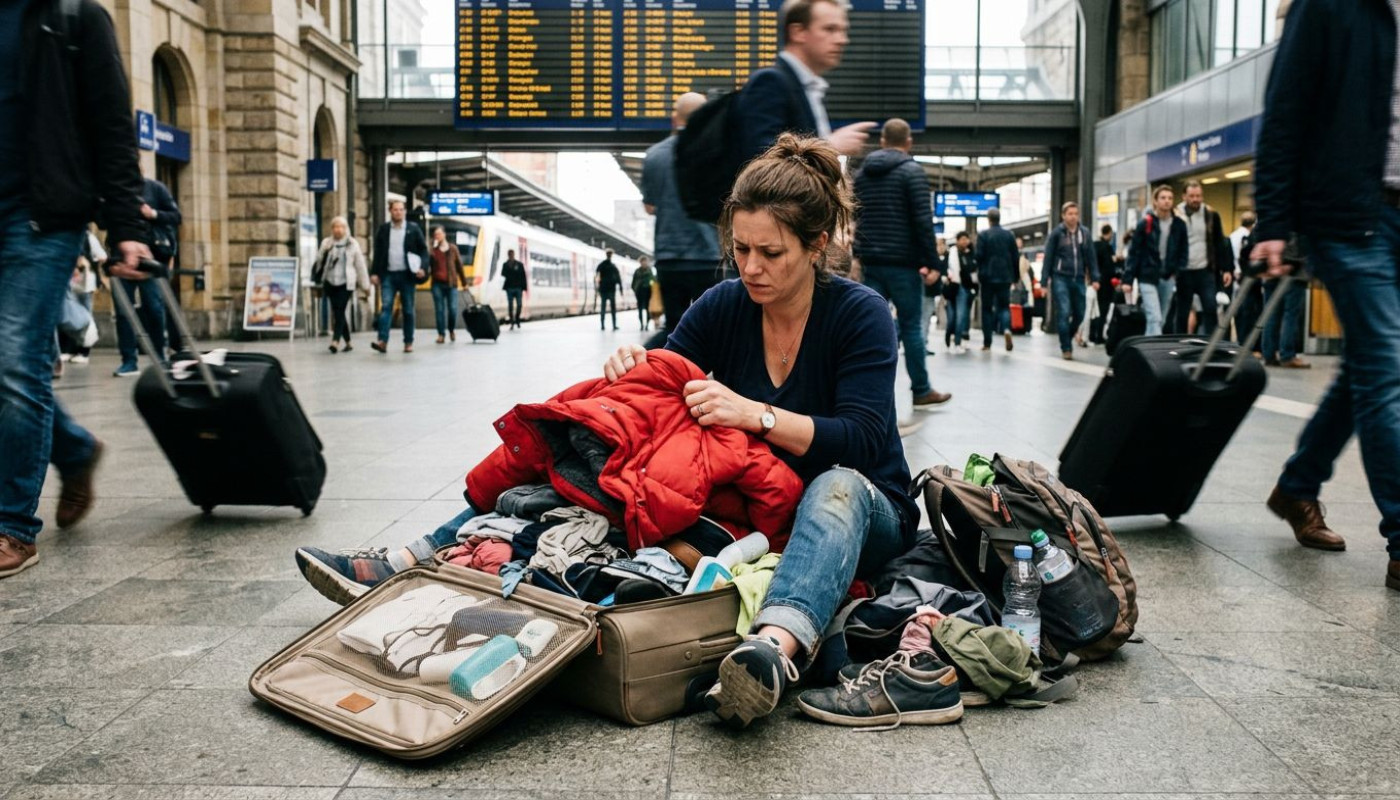
The return leg is where disciplined packers separate from everyone else. On the way out, bags are neat, and clothing is folded with intention; on the way back, you are tired, laundry is bulkier than you expect, and souvenirs are awkward shapes that refuse to cooperate. This is how travelers end up at the airport floor, kneeling beside an open suitcase, redistributing weight while strangers step around them. The fix is not complicated, but it requires thinking ahead: pack a foldable tote or a compressible duffel, plan for dirty clothes with a lightweight bag, and leave space for items you know you will buy. If you do not, you will be forced to make choices under pressure, and those choices are often expensive, because last-minute baggage fees can be punitive and vary widely by carrier and route.
Another overlooked factor is documentation and fragility. Receipts for VAT refunds, tickets for duty-free warranties, and proof of purchase for high-value items should not be scattered, because replacing paperwork is harder than replacing objects. Fragile souvenirs deserve the center of the bag, cushioned by soft clothing, not the outer edge where a bump can crack them. And if you are bringing home food, check import limits and sealing rules, because an unsealed jar or a leaky package can turn your suitcase into a write-off. Good packing protects more than belongings, it protects mood, and mood determines whether you remember the trip as smooth or stressful, generous or rushed, a story you want to tell or one you would rather compress into a shrug.
A tighter plan, fewer regrets
Reserve key slots early, especially flights and timed-entry tickets, and keep a small budget for the unglamorous essentials you may need on arrival. If you qualify for fare discounts or local transit passes, verify requirements before departure. Pack with the first and last day in mind, and your itinerary stays yours, not the airline’s or the queue’s.
Similar

The Art Of Crafting Itineraries That Spark Spontaneous Adventure

What Software Companies Won’t Tell You About User Feedback

The Rise of Slow Travel: Embracing the Journey

Discover the Hidden Gems of Italy's Lesser-Known Regions

Walking on the Wild Side: Dark Tourism Destinations
